
BLOG
Digestible insights for midlife nourishment, inside and out.
Why Starving Yourself Backfires: The Midlife Metabolism Truth for Women 40+

I grew up just outside of New Orleans, where gumbo simmered all day, Zydeco music pulsed through the house, and Sunday dinners were about rhythm and connection as much as food itself. No one talked about insulin or estrogen at those tables. No one mentioned cortisol rhythms or mitochondrial signaling. Food wasn’t measured in macros—it was measured in love.
Years later, I found myself sitting across from midlife women who were doing everything they’d been told : eating less, skipping meals, pushing through fatigue with coffee, logging endless steps—and still wondering why their bodies felt like they were working against them. I recognized these women not just because I work with them, but because in many ways, I’ve been her too.
When Willpower Meets Physiology
She’s the kind of woman you recognize instantly. She wakes before dawn to get a head start on the day. She pours a strong cup of coffee, tells herself she’s “not really hungry,” and skips breakfast because she’s trying to “be good.”
By mid-morning, she’s running on caffeine and adrenaline. Her brain feels a little foggy, but she powers through. Lunch comes late, maybe it’s light—or maybe it’s another coffee and a granola bar at her desk. By mid-afternoon, the crash hits hard. She reaches for sugar or more coffee just to make it through the evening rush.
Later that night, her mind is buzzing when it should be winding down. Sleep is restless. She wakes up tired, again. The scale won’t move—or worse, her midsection feels like it’s expanding overnight. She blames herself.
The truth? Her body isn’t broken. It’s adapting exactly as it’s designed to—to stress, scarcity, and survival signals.
In midlife, your cortisol rhythm—the rise-and-fall pattern that governs your daily energy—is already shifting. For many women, the morning rise flattens and evening cortisol stays elevated, creating that “wired at night, tired by day” cycle. Add chronic under-fueling, and your brain hears a clear message:
“Resources are scarce. Conserve everything.”
This isn’t willpower failing. This is physiology taking the wheel.
The Quiet Metabolic Brake: Thyroid, T3, and Mitochondria in Midlife
Your thyroid is like your body’s thermostat, and T3—the active thyroid hormone—is the heat. But your body only makes adequate T3 when it senses safety and enough fuel.
When calories stay low for too long, the conversion from T4 to T3 slows down. The thermostat turns down to “save energy.” Meanwhile, your mitochondria—the tiny powerhouses inside your cells—aren’t getting the fuel or signaling they need. Imagine dimming the lights in your home to conserve power during a storm. That’s exactly what your metabolism does.
Cold hands and feet. Brain fog that feels like moving through water. Fatigue that sleep doesn’t fix. That “my metabolism just isn’t what it used to be” sensation.

I see this pattern all the time. Women trying to be disciplined end up in metabolic conservation mode. One woman I worked with ran her mornings on coffee alone, thinking she was helping her weight. Her cortisol curve was flat. Her T3 levels were low. Her mitochondria were under-fueled. Within weeks of reintroducing balanced morning meals and protein at lunch, her energy returned, her brain fog lifted, and the scale finally began to respond—not because she “pushed harder,” but because she stopped fighting her own physiology.
The Coffee-for-Breakfast Loop
This is one of the most common traps I see, especially among high-achieving midlife women. Mornings are busy. Coffee is easy. Real meals feel like a luxury.
But coffee on an empty stomach spikes cortisol and destabilizes blood sugar. Skipping real food in the morning sets up the classic mid-morning crash. Insulin signaling falters, cravings sharpen, and by afternoon you’re reaching for sugar or more caffeine just to keep going.
For many women, this loop runs for years. It feels familiar. It feels “normal.” But it’s quietly exhausting your system.
Midlife brings changes in estrogen and progesterone that make blood sugar stability even more crucial. Layering coffee-as-breakfast on top of hormone transitions is like trying to balance on a chair with one leg.
I’ve had seasons like this too—particularly when I was finishing graduate school and launching my business. There were mornings when I’d convince myself I could “catch up” on food later. What I didn’t realize then was that I was teaching my body to live on stress chemistry instead of nourishment. The fatigue caught up with me fast.
Why Rhythm, Not Restriction, Heals Metabolism
The turning point—for my clients and for me—comes when we stop asking, “How little can I eat?” and start asking, “How rhythmically can I support my body?”
Midlife metabolism isn’t broken. It’s responsive. When you eat protein-rich, balanced meals at consistent times, you’re telling your brain and body, “You’re safe. You have what you need. You can turn the lights back on.”
Cortisol stabilizes. Thyroid conversion improves. Insulin sensitivity recalibrates. Mitochondria hum back to life.
It’s not about eating more junk. It’s about eating enough of the right things, at the right times, to give your body the signals it’s craving.
For example, starting the day with 25–30g of protein (think eggs, smoked salmon, or a protein smoothie with greens) tells your cortisol rhythm the day has begun and gives your mitochondria a clean fuel source. Pairing that with steady, balanced meals every 4–5 hours keeps blood sugar stable and prevents the afternoon energy crash that so many women accept as “normal.”
The Turn: Nourish, Don’t Punish
For many women, this shift is as emotional as it is physical. After years—even decades—of dieting, it can feel almost dangerous to trust food again. To eat breakfast. To stop skipping meals. To release the fear that every bite will be stored as fat.
But the truth is, midlife is asking for partnership, not punishment. Your hormones, thyroid, and mitochondria are all listening closely to what you do each day. When the signal is rhythm and nourishment, your body responds with energy, clarity, and balance.
For me, this looked like reintroducing structured meals even during busy seasons, pairing protein with my cultural favorites, and giving my body the kind of steadiness it thrives on. For my clients, it often looks like reclaiming mornings, setting boundaries around mealtimes, and learning to eat without guilt.

A Quick Style Shift That Makes a Difference
As women embrace these rhythm changes, I often hear something like:
“I’m finally walking more, fueling consistently… but I hate the way my clothes feel by midday.”
This is where lifestyle upgrades make the journey easier.
Disclosure: This post contains affiliate links. If you purchase through these links, I may earn a small commission at no extra cost to you. I only share products I personally use and love.
I recently partnered with Undersummers, a company that designs moisture-wicking, lightweight, silky-soft slip shorts and biker shorts that keep you cool and comfortable all day long. Their breathable, chafe-free designs fit beautifully on every body type—including plus sizes—and give that easy, confident feel that lets you move freely.
They’ve given my community 20% off with the code MIDLIFERESET. If you’re ready to upgrade your wardrobe as you upgrade your metabolism, you can explore their collection here. It’s one of those small, practical shifts that supports the bigger transformation.
Your Body Isn’t the Enemy — It’s the Messenger
Starving yourself doesn’t make your body listen. It makes it retreat.
When you understand how cortisol, thyroid, insulin, and mitochondrial signaling work together, the mystery behind midlife fatigue, belly fat, and brain fog dissolves. What’s left is a clear path: not restriction, but rhythm.
Midlife isn’t a metabolic dead end. It’s an invitation to work with your body’s wisdom.
Take the Gut–Hormone Pattern Quiz to discover your unique energy–hormone loop and get your free 3-Day Reset. It’s the starting point I wish every woman had before she tried another diet.
Related Posts You May Enjoy
Disclaimer: This content is for educational purposes only and is not intended to diagnose, treat, cure, or prevent any disease. It should not replace personalized medical advice. Always consult your healthcare provider before making changes to your diet, lifestyle, or health regimen.

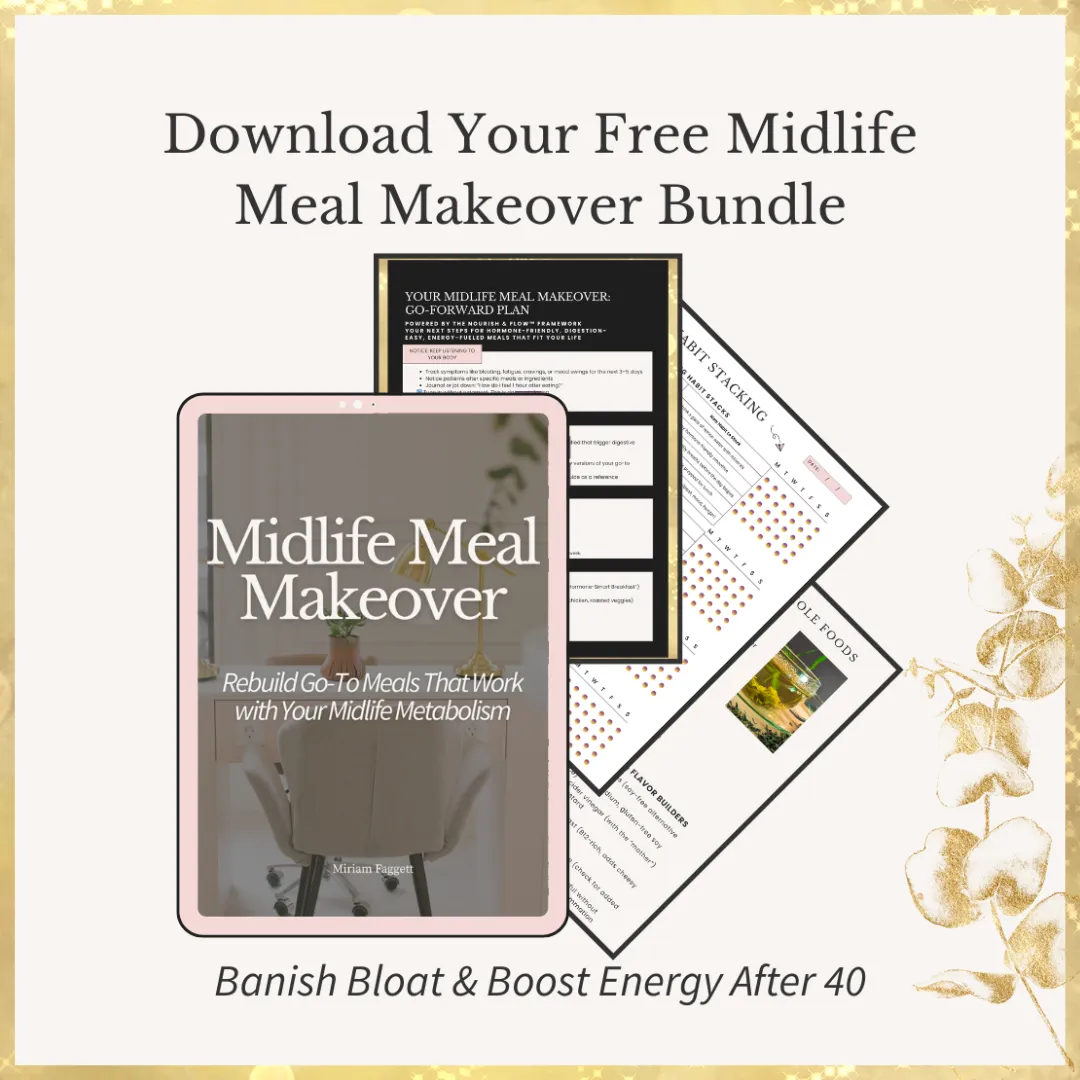
FREE DOWNLOAD
If Your Gut, Hormones, and Energy Are Screaming ‘Help’—This Is for You.
Stop fighting your symptoms and start feeding your body what it actually needs in this phase of life.
© Copyright 2023 Business Name.